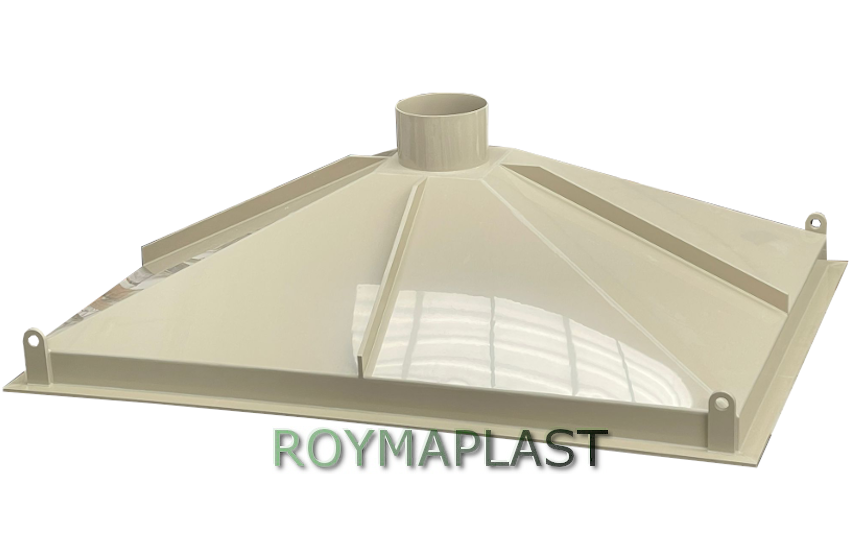
The hoods capture, contain and expel emissions generated by hazardous chemicals.
They protect the operator against projections and splashes.
It allows working in an area of the laboratory where the absence of ignition sources can be ensured.
They can (depending on design) protect against even small explosions.
It allows the entry of clean air in jobs that require it.
Facilitates air renewal in the laboratory.
Creates a depression in the laboratory that prevents contaminants from escaping to adjacent areas.
Requirements to be met by a fume hood
- Allow observation of the development of the work.
- It shall not hinder the development of the work inside it.
- It will maintain the same efficiency working with the front open or closed.
- It shall be easily washable and decontaminable.
- It will not cause excessive noise.
Efficiency of fume hoods extraction
The ability of the fume hood to provide adequate protection depends on the following factors:
*Speed control on the front of the hood:
Capture velocity with fully open front 0.6 - 0.7 m/s.
It is not advisable for the collection speed to exceed 1 m/s (turbulence).
*Air movement and flow path in the room:
Away from doors, corridors, exit ways.
Drafts interfere with its operation.
*Turbulences inside the fume hood. If the speed is high, turbulences are produced, which are avoided by installing short circuits in the air inlet of the fume hood.
*Effect of the operator's presence on the flow path at the front of the hood.
Source: www.unirioja.es